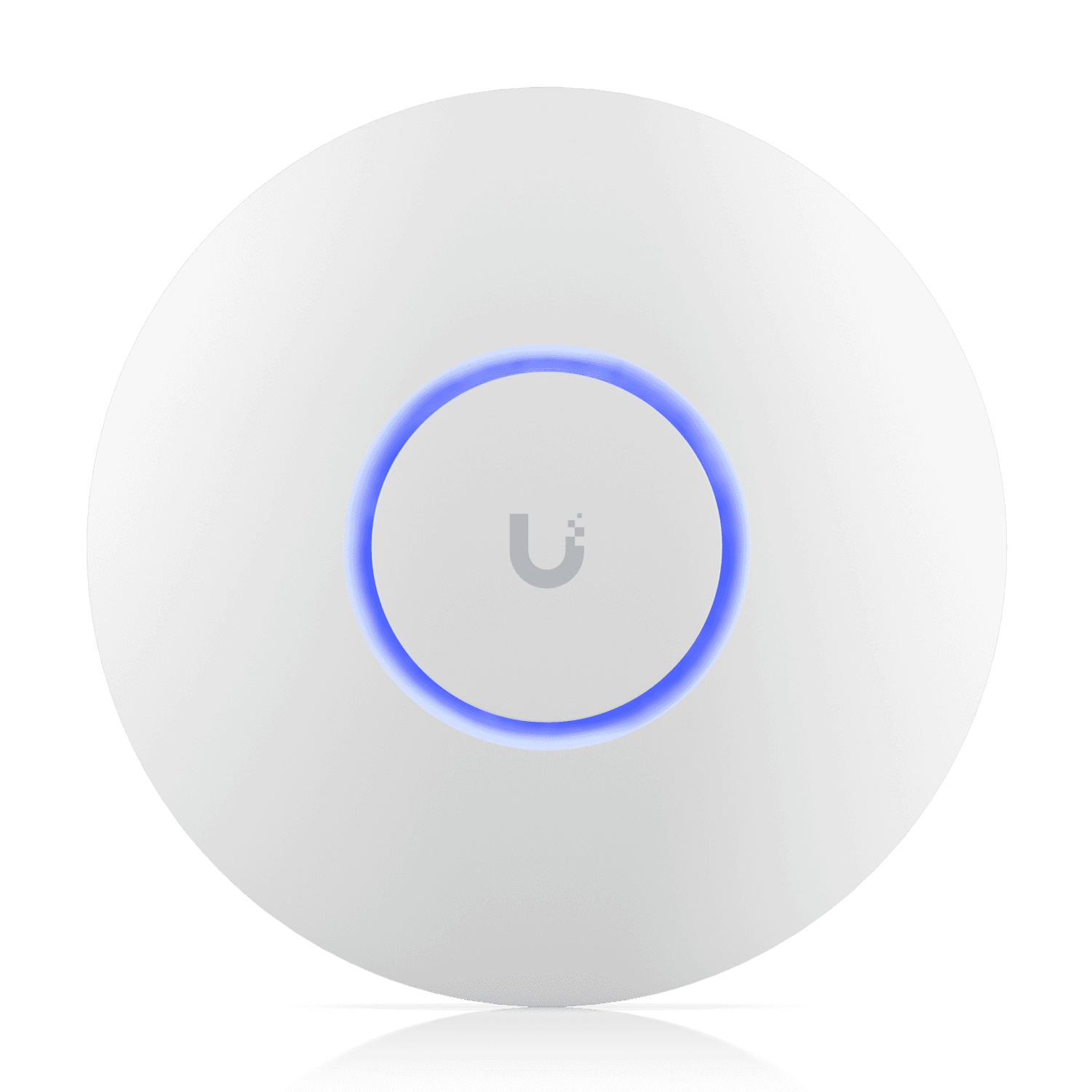
Ubiquiti · Model U6+
Compact dual-band WiFi 6 access point, 2×2, 9 W.
Overview
The U6+ is a compact dual-band WiFi 6 access point (2×2 on each band) with up to 2.4 Gbps on 5 GHz, a gigabit uplink, low 9 W PoE consumption and 300+ clients.
UniFi equipment from Ubiquiti is managed from the UniFi Network application, running on a UniFi Cloud Gateway or a self-hosted controller, with no licence fees.
Key specifications
| Wi-Fi | WiFi 6, 2.4 / 5 GHz, 2×2 per band |
|---|---|
| Max data rate | 2.4 Gbps (5 GHz), 573.5 Mbps (2.4 GHz) |
| Uplink | 1 × GbE |
| Power | PoE, 9 W max |
| Clients / coverage | 300+; 140 m² |
Figures from Ubiquiti product documentation. Specifications can change; ask us to confirm before you order.
Where it fits best
- Offices and small businesses
- Schools and campuses
- Hotels and multi-site retail
- Server rooms and network cores
Industries it serves
Browse RUNDLJ equipment selected for these sectors:
Points to consider before buying
- Check the PoE class and uplink speed of your switch port.
- Plan coverage per room; walls and floors reduce range.
Frequently asked questions
Can RUNDLJ supply the U6+?
The U6+ is not in our online catalogue, but RUNDLJ can often source it, or a current equivalent, for customers in Canada and the United States. Ask us for availability and pricing.
How is the U6+ managed?
UniFi devices are adopted and managed in the UniFi Network application (on a UniFi gateway, a Cloud Key or a self-hosted server), with no licence fees. Ask us to help you plan the deployment.
Does RUNDLJ ship this product to Canada and the United States?
Yes. RUNDLJ supplies this product on order to businesses across Canada and the United States. Contact us for current pricing and lead times.
Documentation
Need the official datasheet, the quick-start guide or the installation guide? Ask RUNDLJ and we will send you the manufacturer’s documents with your quote.
Related products in the wiki
Get pricing and availability
This model is not in our online catalogue, but RUNDLJ can often source it or a current equivalent across Canada and the United States. Ask our bilingual team.
Wiki page updated November 2026.